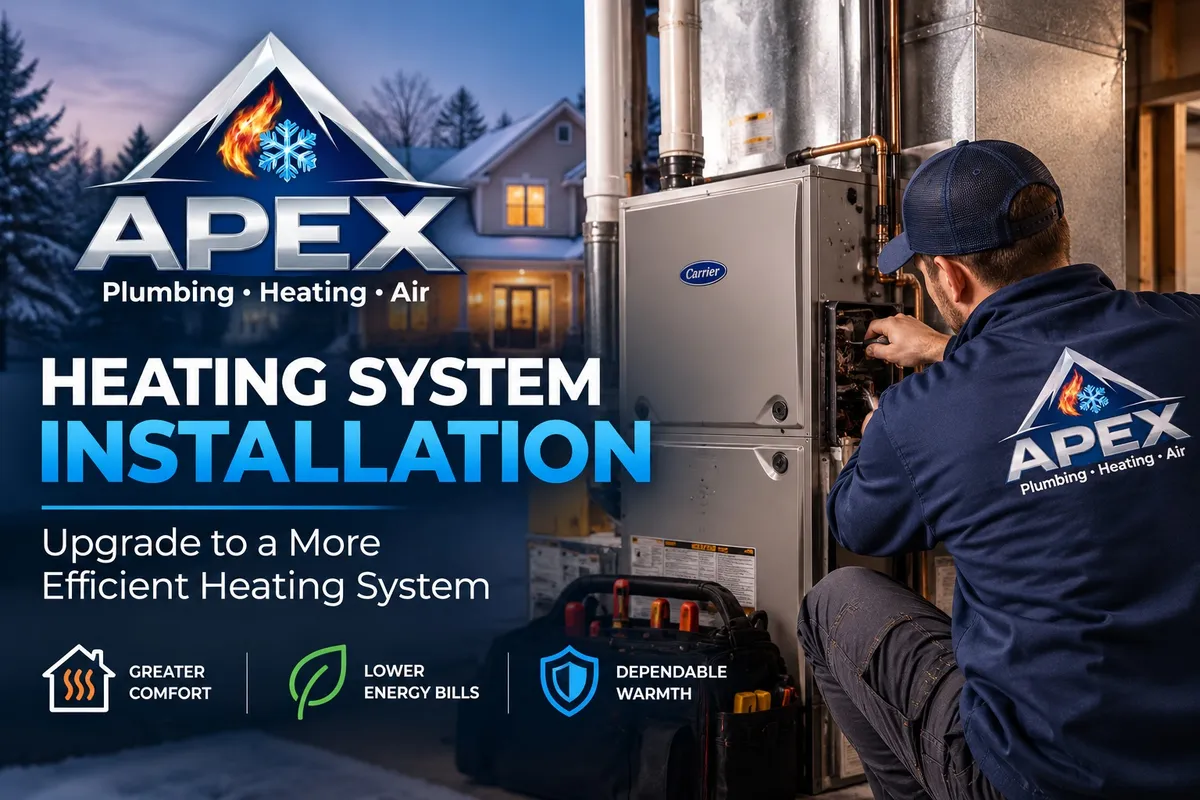
Heating System Installation: Upgrade to a More Efficient Heating System
When winter temperatures drop in Pennsylvania, a dependable heating system is essential to keep your home comfortable. An aging or inefficient furnace can struggle to keep up with colder weather, leading to uneven temperatures, higher energy bills, and unexpected breakdowns. Upgrading to a modern, energy-efficient heating system can improve indoor comfort while providing reliable warmth throughout the winter months.
For homeowners in York, Hanover, Gettysburg, New Oxford, and surrounding Pennsylvania communities, professional heating system installation can improve heating performance, reduce unnecessary energy use, and provide greater peace of mind during the coldest months of the year.
At APEX Plumbing, Heating & Air, we provide professional heating system installation services tailored to your home's specific heating needs. Whether you're replacing an outdated furnace or installing a new heating system, our experienced HVAC technicians can help you select an appropriately sized system that delivers dependable comfort and efficient performance.
When Is It Time to Replace Your Heating System?
Heating systems are designed to provide years of reliable service, but even well-maintained equipment eventually wears out and performs less well. As a furnace or heating system ages, it may require more frequent repairs, operate less efficiently, or struggle to maintain consistent temperatures throughout the home.
One common indication that your heating system may need replacement is a noticeable increase in energy bills without a corresponding change in usage. Other warning signs include uneven heating, unusual noises, frequent cycling, and repeated service calls. If some rooms stay cold while others get uncomfortably warm, your current system may no longer meet your home's heating needs.
Equipment age is another important consideration. Many residential furnaces operate for approximately 15 to 20 years, although their actual service life depends on equipment quality, maintenance, usage, and installation conditions. If your heating system is approaching this age range and experiencing recurring problems, replacing it may be more practical than continuing to invest in repairs.
A professional HVAC evaluation can help determine whether your existing heating system can be repaired or whether a new installation would provide better long-term value.
The Benefits of Installing a High-Efficiency Heating System
Modern heating systems incorporate advanced technology designed to provide dependable warmth while using energy more efficiently. Upgrading an older furnace to a high-efficiency model can offer several advantages, particularly for homeowners who rely heavily on their heating equipment during Pennsylvania's colder months.
One primary benefit is improved energy efficiency. High-efficiency furnaces convert a higher percentage of their fuel into usable heat, reducing energy waste during operation. Depending on the efficiency and condition of your existing equipment, a properly installed replacement may help reduce heating expenses while maintaining a comfortable indoor temperature.
Newer heating systems can also provide more consistent temperature control. Features such as variable-speed blower motors, modulating burners, and advanced thermostat compatibility allow certain systems to adjust their operation based on the home's heating requirements. This can reduce noticeable temperature fluctuations and help maintain a more comfortable indoor environment.
In addition to improved efficiency and comfort, a new heating system can reduce the likelihood of breakdowns associated with aging equipment. With professional installation and regular maintenance, homeowners can enjoy reliable heating performance for years.
Why Proper Heating System Sizing Matters
Choosing the right heating system involves more than selecting a furnace with the highest heating capacity. An oversized or undersized system can cause comfort problems, increase energy use, and put unnecessary stress on heating equipment.
An oversized furnace may heat the home too quickly, causing the system to cycle on and off frequently. This can contribute to uneven temperatures, unnecessary equipment wear, and reduced operating efficiency. An undersized system, on the other hand, may struggle to maintain the desired indoor temperature during extremely cold weather.
Professional heating system installation begins with evaluating the home's specific heating requirements. Factors such as square footage, insulation levels, window quality, ceiling height, air leakage, and local climate conditions influence the heating capacity needed.
A proper heating load calculation helps determine the right equipment size instead of relying solely on the existing furnace capacity. At APEX Plumbing, Heating & Air, we match heating equipment to the home's requirements to support dependable performance, energy efficiency, and long-term comfort.
Choosing the Right Heating System for Your Home
Every home has different heating requirements, and selecting the appropriate equipment depends on the property's layout, existing infrastructure, available energy sources, and the homeowner's comfort preferences.
High-efficiency gas furnaces remain a common heating option for Pennsylvania homes with existing natural gas or propane connections. Modern furnaces come with different efficiency ratings and operating features, allowing homeowners to choose equipment that balances upfront costs with long-term energy performance.
Heat pumps provide another heating option, transferring heat from the outdoor air into the home rather than generating heat through fuel combustion. Certain modern heat pump systems are designed to operate efficiently in colder climates, although equipment selection and installation requirements depend on the home's heating needs and local conditions.
Homes equipped with boilers or radiant heating systems may require a different replacement approach. Evaluating the existing distribution system, available space, and equipment compatibility helps determine the right heating solution for the property.
Working with an experienced HVAC contractor lets homeowners compare options and choose a system that supports their comfort goals, budget, and long-term heating needs.
Professional Heating System Installation Makes a Difference
Even the most advanced heating equipment may not perform as intended if it is improperly installed. Professional installation is essential to ensure the heating system operates safely, efficiently, and in accordance with manufacturer specifications.
The installation process typically begins with an evaluation of the existing heating equipment, ductwork or heat distribution system, electrical connections, and ventilation requirements. When replacing a furnace, the technician must also determine whether modifications are necessary to accommodate the new equipment.
Proper installation includes establishing appropriate airflow, connecting the heating system to the home's existing infrastructure, and verifying that the equipment operates within its required performance specifications. Gas-fired heating systems also require appropriate fuel connections, combustion air, venting, and safety checks.
After installation, the technician should test the system, verify thermostat operation, and confirm the equipment is heating the home properly. These steps help identify potential performance issues before the system enters regular operation.
Professional heating system installation helps homeowners protect their investment while supporting safe operation, dependable comfort, and efficient energy use.
Improve Indoor Comfort with Modern Heating Technology
A new heating system can provide more than dependable warmth. Modern HVAC technology offers features that can improve heat distribution throughout the home and provide greater control over indoor temperatures.
Variable-speed blower motors allow compatible systems to adjust airflow to heating needs, potentially improving temperature consistency while reducing the abrupt airflow changes associated with some older equipment. Two-stage and modulating furnaces can also adjust heating output based on demand, providing more gradual temperature control during milder weather.
Smart thermostats add convenience by letting homeowners set heating schedules, monitor temperature settings, and adjust compatible systems remotely. When properly configured, programmable temperature settings may help reduce unnecessary heating during periods when the home is unoccupied.
For homes experiencing uneven temperatures, a professional HVAC evaluation may also identify opportunities to improve ductwork, airflow, insulation, or other factors that affect heating performance.
Combining properly selected heating equipment with appropriate system controls can create a more comfortable indoor environment while supporting efficient operation.
How a New Heating System Can Help Reduce Energy Costs
Heating expenses can make up a significant portion of household energy use during Pennsylvania's winter months. Replacing an older, inefficient heating system with modern equipment may reduce energy use, especially if the existing furnace has experienced substantial performance deterioration.
Furnace efficiency is commonly measured using Annual Fuel Utilization Efficiency, or AFUE. This rating represents the percentage of fuel energy that a furnace converts into usable heat over a typical heating season. For example, a furnace with a 95% AFUE rating converts approximately 95% of its fuel energy into usable heat, with the remaining energy lost during the heating process.
However, actual energy savings depend on several factors, including the previous system's efficiency, local fuel prices, thermostat settings, home insulation, and heating demand. A high-efficiency furnace in a poorly insulated home may still consume substantial energy if heat escapes through windows, walls, or other areas.
Professional equipment selection, correct installation, and regular maintenance help homeowners get the most from their heating system while avoiding unnecessary energy waste.
Maintain Your New Heating System for Long-Term Performance
Installing a new heating system is an important investment, and regular maintenance helps protect that investment throughout its service life. Routine inspections and preventive maintenance can identify developing problems, maintain proper airflow, and help ensure that heating equipment continues operating as intended.
Homeowners should follow manufacturer recommendations for replacing or cleaning air filters, keeping supply and return vents unobstructed, and maintaining appropriate thermostat settings. Scheduling professional heating maintenance before the winter season also provides an opportunity to inspect essential components and identify issues that could affect system performance.
During a maintenance visit, an HVAC technician may inspect electrical connections, evaluate airflow, check safety controls, examine combustion and venting components where applicable, and verify that the heating system is operating properly.
Consistent maintenance can help reduce unexpected breakdowns, support efficient operation, and extend the useful life of heating equipment.
Frequently Asked Questions About Heating System Installation
How do I know if I need a new heating system?
Common signs that your heating system may need replacement include frequent repairs, rising energy bills, uneven heating, unusual operating noises, and difficulty maintaining comfortable indoor temperatures. If your furnace is approaching 15 to 20 years of age, a professional HVAC evaluation can help determine whether replacement is appropriate.
Will installing a high-efficiency furnace lower my heating bills?
A high-efficiency furnace may reduce heating expenses when replacing older, less efficient equipment. However, actual savings depend on your previous system's efficiency, home insulation, heating habits, fuel prices, and proper equipment installation. A professional HVAC technician can help you compare available heating systems and evaluate potential energy savings.
How long does professional heating system installation take?
Many straightforward residential furnace replacements can be completed within one day, although the actual installation timeline depends on the equipment, existing ductwork, utility connections, ventilation requirements, and any necessary modifications. More complex installations may require additional time to complete safely and correctly.
Upgrade Your Home's Heating System with APEX Plumbing, Heating & Air
A dependable heating system is essential for maintaining a comfortable home throughout Pennsylvania's cold winter months. Whether your existing furnace has frequent problems, your heating bills are rising, or you're ready to upgrade to more efficient equipment, professional heating system installation can improve comfort and long-term performance.
At APEX Plumbing, Heating & Air, our experienced HVAC technicians provide professional furnace installation and heating system replacement services tailored to your home's specific requirements. We focus on appropriate equipment selection, proper installation, and dependable performance to help homeowners enjoy consistent warmth throughout the heating season.
Proudly serving York, Hanover, Gettysburg, New Oxford, East Berlin, Dover, Spring Grove, and surrounding Pennsylvania communities, APEX Plumbing, Heating & Air is ready to help you explore your heating system replacement options.
Ready to upgrade to a more efficient heating system? Contact APEX Plumbing, Heating & Air today at (717) 801-0644 to discuss your heating installation needs and request an estimate.
Explore our professional heating system installation options to find the right equipment for your home. If your current system is experiencing problems, learn more about our heating repair services to determine whether repair or replacement is the appropriate next step.
Disclaimer: This article is intended for general informational and entertainment purposes only and should not be considered professional advice. Always consult a qualified professional regarding your specific needs or circumstances.